

Introduction to TMJ Surgery Cost with Insurance
For many, the jaw is a joint they never think about until it stops working. But when that hinge the temporomandibular joint starts clicking, locking, or radiating a dull, throbbing pain, it is all you can think about. When the usual remedies like night guards or physical therapy hit a dead end, your specialist might bring up the S word: Surgery.
The immediate panic is not always about the procedure itself, but rather the financial weight of it. Calculating the tmj surgery cost with insurance is notoriously tricky because the jaw exists in a medical grey zone between dentistry and medicine. This guide breaks down exactly what you are looking at in terms of dollars and cents.
What is the Average TMJ surgery cost with insurance?
The cost of TMJ surgery cost with insurance is not a one-size-fits-all price tag. Think of it like car repairs; flushing out the fluid is a lot cheaper than replacing the entire engine. Since the jaw is a complex system involving a delicate disc and several muscle groups, the price reflects the complexity of the intervention.
In 2026, the general price ranges for these procedures (before any insurance is applied) look like this:
- Arthrocentesis: $1,000 – $3,000 (The simplest washout).
- Arthroscopy: $6,500 – $17,000 (Minimal incisions with a camera).
- Arthroplasty: $14,000 – $30,000 (Open joint surgery to repair the disc).
- Total Joint Replacement: $40,000 – $85,000 (Complete artificial jaw reconstruction).
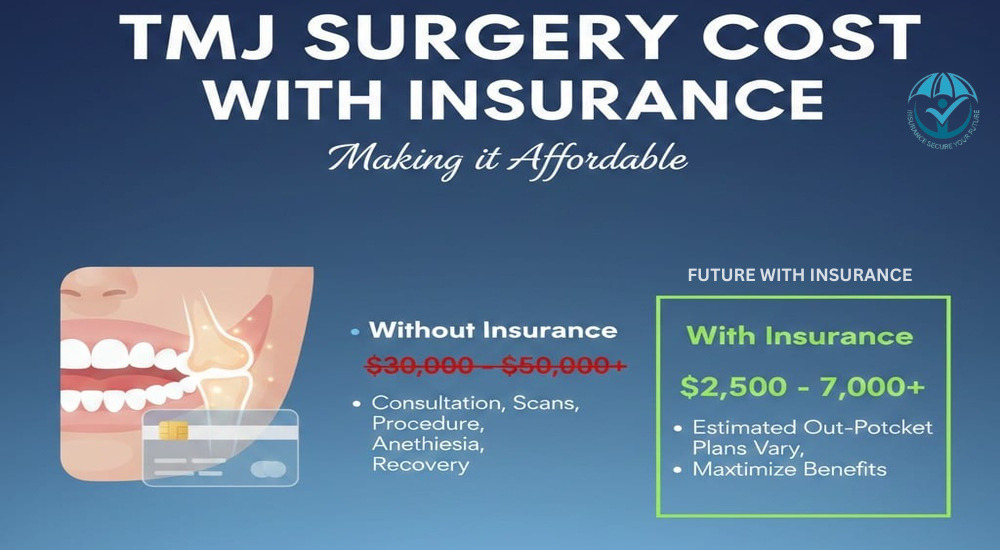
How Much Does TMJ Surgery Cost Without Insurance?
Facing the TMJ surgery cost without insurance is a heavy burden. If you are paying self pay, you aren’t just paying the surgeon. You are the one responsible for the hospital’s hourly rate for the operating room, the anesthesiologist’s fee, the high resolution MRI scans, and the specialized hardware. For a total joint replacement, a self pay patient in a major city could easily see a bill exceeding $100,000.
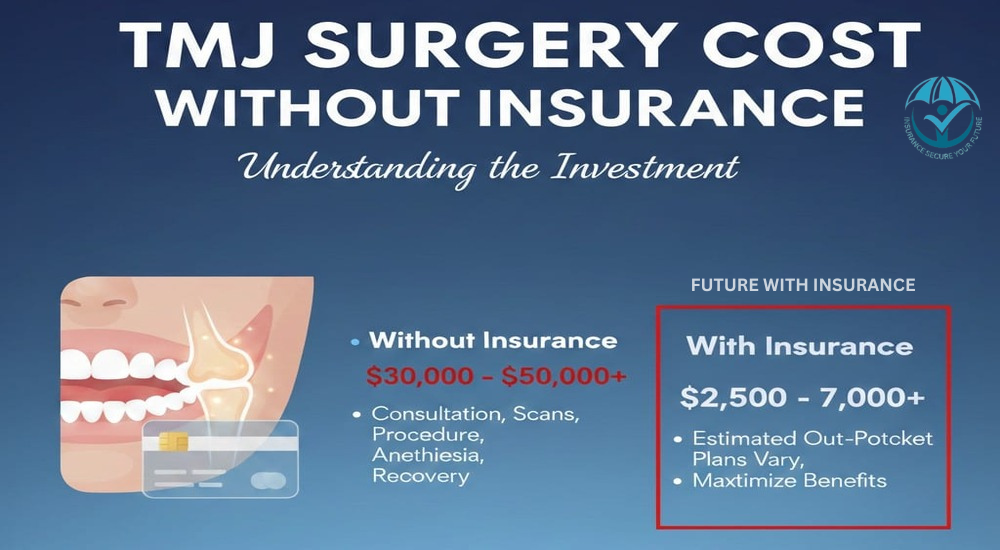
TMJ Surgery Cost with Insurance: What is Covered?
The good news is that by 2026, most major health insurance carriers have moved away from the old TMJ Exclusion clauses. How ever, getting them to pay requires you to jump through several hoops to prove the surgery is a medical necessity.
Medical vs Dental Insurance: The Great Tug of War
Medical Insurance This is where you want your claim to land. Major surgeries like arthroscopy or joint replacements are considered medical because they relate to the skeletal system and functional movements (eating and breathing).
Dental Insurance Most dental plans have an annual maximum cap of $1,500 to $2,500. While this might cover the initial consultation or a bite splint, it won’t even scratch the surface of the actual cost of TMJ surgery.
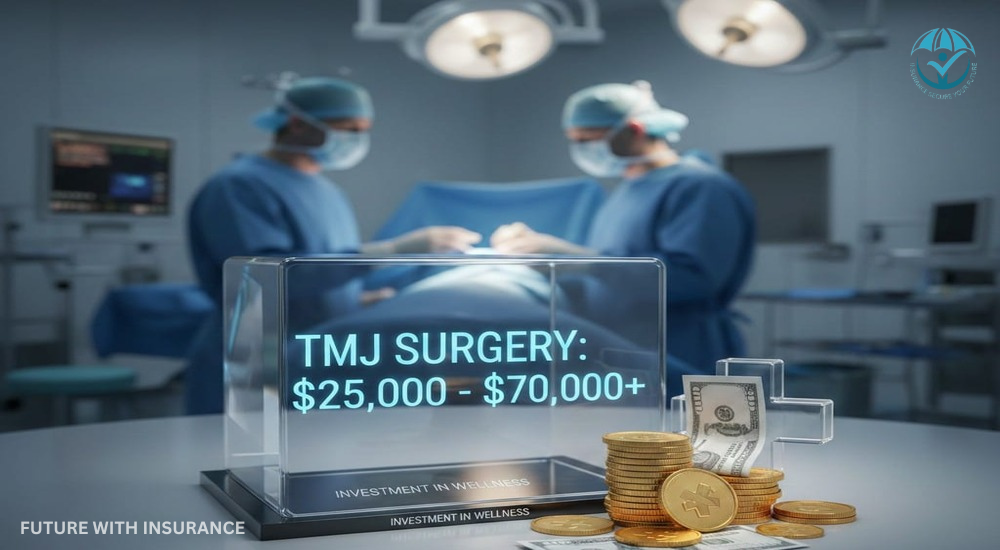
Your Potential Out of Pocket Expenses
Even with platinum coverage, your TMJ surgery cost with insurance will include:
1. Deductibles: The initial amount you pay (often $1,000–$5,000) before insurance chips in.
2. Co insurance: Your percentage of the bill (usually 20%). On a $20,000 surgery, that’s $4,000 out of your pocket.
3. Out of Pocket Max: The silver lining once you reach this limit, the insurance pays 100% for the rest of the year.
Insider Tip: Always demand a Pre Certification in writing. It is your only shield against the insurance company claiming later that the surgery was experimental.
Factors That Influence the Cost of TMJ Surgery
When you ask, how much does TMJ surgery cost with insurance, you have to realize that surgeons don’t just pull a number out of a hat. Several variables move the needle:
facet Budgetary Effects
Location Clinics are cheaper than big hospitals.
Both Sides Treating both sides almost doubles the price.
Parts Custom titanium implants are the most expensive.
Specialist Expert surgeons charge much higher fees.
Duration Longer surgeries lead to higher anesthesia bills.
Common Types of TMJ surgery cost with insurance and Their Pricing
To get a realistic grip on the cost of TMJ surgery, you need to know exactly which procedure your doctor is proposing.
1. Arthrocentesis (Minimally Invasive)
This is often the test surgery. The doctor uses two needles to flush out the joint space. It clears out the gunk (inflammatory markers) that causes pain.
- Estimated Cost: $1,200 $3,500.
- Insurance Status: Usually covered easily as a first line surgical treatment.
2. TMJ Arthroscopy
Using a tiny camera, the surgeon can see the joint in HD. They can shave down bone spurs or move a displaced disc back into place.
- Estimated Cost: $7,500 $18,000.
- Insurance Status: Good coverage, provided you can prove you tried mouthguards first.
3. Open Joint Arthroplasty
If the camera isn’t enough, the surgeon makes a larger incision near the ear to physically repair the joint. This is a much more intense recovery.
- Estimated Cost: $15,000 $35,000.
- Insurance Status: Generally covered for severe structural damage or lockjaw.
4. Total Joint Replacement (TJR)
This is the end of the road solution. The entire joint is removed and replaced with a man made one. It is a life changing procedure for those with bone on bone arthritis.
- Estimated Cost: $45,000 $90,000.
- Insurance Status: High stakes; often requires a Letter of Medical Necessity and multiple imaging reports.
Hidden Costs: Beyond the Operating Room
When people research how much does TMJ surgery cost with insurance, they often miss the small numbers that add up to big problems:
The Assistant Surgeon: Many jaw surgeries require two sets of hands. That second surgeon might be out of network, even if the first one is in network.
Pathology Fees: If they remove tissue, it goes to a lab. That’s an extra $500–$1,000.
Physical Therapy: You do not just heal you have to train your jaw to work again. Expect $150 per session for several months.
Imaging (MRI/CT): The roadmap for surgery isn’t free. Advanced 3D scans can run $2,000.
How to Get Insurance to Pay for TMJ Surgery
Don’t let the insurance company bully you into paying the full TMJ surgery cost without insurance. Use these human tactics:
Be the Perfect Patient: Document every single thing you tried before surgery. Every ibuprofen, every heat pack, every physical therapy session.
Speak the Right Language: Use medical terms. Do not say my jaw hurts. Say my jaw has a functional impairment that limits my ability to chew and speak.
The Peer to Peer Review: If they deny you, ask your surgeon to do a Peer to Peer call with the insurance company’s doctor. Often, one doctor talking to another is all it takes to get an approval.
Check the CPT Codes: Ensure your surgeon’s office is using medical codes (like 21240) rather than dental codes (like D7880).
Conclusion: Weighing the Investment
The TMJ surgery cost with insurance is undoubtedly high, and the journey to get it covered is exhausting. But for the person who has not been able to eat a normal meal or speak without pain for years, the TMJ surgery cost with insurance is not just a bill it’s the price of a second chance.
While paying the TMJ surgery cost without insurance is a massive financial hurdle, most patients find that with enough documentation and a strong surgical team, they can get the help they need without going into a life time of debt.
QUESTIONS ANSWERS
1. Is TMJ surgery billed as medical or dental?
In the insurance world, the jaw joint is treated as a medical issue. While your dentist might diagnose you, the actual cost of TMJ surgery cost with insurance is almost always processed through your medical insurance. Dental plans usually tap out at $2,000, which won’t cover a surgical bill.
2. What is the average out of pocket cost with insurance?
Even with a good plan, you’ll likely pay between $2,500 and $10,000. This depends on your deductible or co insurance. Once you hit your out of pocket maximum for the year, your insurance should theoretically cover the rest of the bill 100%.
3. How much does TMJ surgery cost without insurance?
If you are paying the sticker price yourself, a simple arthroscopy starts around $8,000. However, a full scale joint replacement can skyrocket to $100,000 or more. Without a negotiated insurance rate, you are responsible for the surgeon, the hospital stay, and the titanium parts.
4. Why do insurance companies often deny TMJ claims?
Most denials happen because the insurer thinks you haven’t suffered enough with cheaper treatments. They want to see that you tried mouthguards, physical therapy, and muscle relaxants for at least 6 months before they agree to pay the TMJ surgery cost.
5. Does insurance cover custom jaw implants?
Yes, but they are picky about it. You need clear imaging (MRI or CT) showing that your natural bone is failing. If your surgeon proves the joint is bone on bone, insurance will usually cover the custom 3D printed hardware.
6. What are the common medical codes for TMJ surgery?
To get paid, your doctor must use CPT codes. The most common ones are 21240 (for joint repair) and 21243 (for a total replacement). If your office uses dental D codes, your medical insurance will reject the claim instantly.
7. Does the cost include the anesthesiologist?
Usually, no. One of the biggest gotchas in TMJ surgery cost with insurance is that the anesthesiologist bills separately. This can be an unexpected $1,500 to $3,000 bill that arrives in your mail weeks after the surgery is over.
8. Is the surgery actually worth the high price?
For people who can not open their mouths more than a finger’s width or chew solid food, the answer is usually yes. With a 90% success rate for pain reduction, most patients feel the long term relief justifies the initial financial headache.
9. Are there cheaper alternatives to major surgery?
Yes. Before jumping to a $50,000 replacement, many start with Arthrocentesis (a joint washout). It costs about $1,500 and is often fully covered by insurance because it is minimally invasive and low risk.
10. Can I use my HSA or FSA for these costs?
Definitely. TMJ surgery is a qualified medical expense. Using your HSA or FSA allows you to pay for your deductible and recovery costs using pre tax dollars, which effectively gives you a 25 30% discount on your out of pocket spend.